


For you who have read a couple of my posts might have noticed by now that on top of my intermittent fasting (IF), I set a 1,500-calorie limit on my daily diet. Some critical minds might inquire how did I arrive at that number? To be honest, I simply followed the instructions of my former dieticians. However, there is a logic behind the number.
Before we get to that, let’s recap my progress so far. On June 20, 2022, my result was 83.9 kg (184.96 lbs). These are my results today.
| Item | Measurement, June 28, 2022 | Measurement, January 24, 2022 | Healthy Standard |
|---|---|---|---|
| Weight1 | 83.3 kg (183.64 lbs) | 98.7 Kg (217.6 lbs) | 55.3-68.0 kg (121.9-149.9 lbs) |
| BMI2 | 30.5 (Obese) | 36.2 (Obese) | 18.5-24.9 |
| Waist (circumference)3 | 105 cm (41.33 in) | 122 cm (48.03 in) | < 102 cm (40 in) |
| Hip (circumference)3 | 109 cm (42.91 in) | 120 cm (47.24 in) | |
| Waist to Hip Ratio (WHR) | 0.96 | 1.01 | < 0.9 |
| Blood Pressure4 (Systolic/Diastolic) | 118 mmHg/ 79 mmHg | 137mmHg/ 95 mmHg | 110/70 mmHg- 145/90 mmHg |
Here are the additional measurements:
| Item | Measurement, June 28, 2022 | Measurement, February 5, 2022 | Healthy Standard |
|---|---|---|---|
| Body Fat | 31.5% | 36% | 17.5%-20.6% (Good)4 |
| Visceral Fat Level | 15 | 17 | <13 |
Behind the Magic Number
Everyone has a Basal Metabolic Rate (BMR), or the required calories to maintain a certain body weight. Simply put, BMR is the amount of energy a body needs to run its normal function and maintenance. Without doing any activity, the human body already burns calories just to power itself. According to a BMR calculator, when I was at 98 kilograms and I only did short exercises a few times a week, at my age and body height, my BMR was 2,641 calories. I needed to take in that amount of calories just to stay at 98 kilograms.
A calorie deficit is a condition where someone is taking in fewer calories than what they expend. If my BMR was 2,641 and I ate 2,641 calories without any extra physical activities, I would be at a calorie balance. If I ate 2,541 calories, I would be at a 100-calorie deficit. If I ate and drink no calories at all for the whole day, I would be at a 2,641-calorie deficit.
Assuming that I did not do any more physical activities, eating roughly 1,500 calories a day would put me at a 1,100 calorie deficit per day, and at a 7,700 calorie deficit per week. That is just the right amount of calorie deficit for me to lose 1 kg per week.
Now that I weigh less, my BMR is also smaller than it used to be. At my present weight, my BMR is now 2,359 calories. Maintaining a diet of 1,500 calories a day will only cause an 800-calorie deficit per day or a 5,600-calorie deficit per week. That is one reason why as I get lighter, it will get harder for me to keep the 1-kilogram weight loss per week. That is unless I added extra calorie-burning activities.
Let’s Talk about Carbs
I found that I am a prediabetic.
First, I want to underline that when done correctly, intermittent fasting is safe for a person with pre-diabetes or type-2 diabetes. Some studies even found that IF can help the treatment of diabetes. Second, losing weight and managing blood sugar is key in lifestyle change to prevent pre-diabetes from becoming full-blown type-2 diabetes.
Carbs, or carbohydrates, are sugar molecules. Carbs are one of the three main nutrients found in food. In your body, carbs are broken down into glucose, or blood sugar, which is the main source of energy for the body’s cells, tissues, and organs. When a person eats more carbs than the body needs, the excess glucose is stored as fat. If this happens consistently over a period of time, the person will develop obesity. You can watch a video explaining this here.
A couple of weeks ago I started what I imagined as a low-carb diet. In short, I tried to eat fewer carbs and more protein and fat. Using the fatsecret.com app, I found that my macronutrient consumption for the past week was like this.
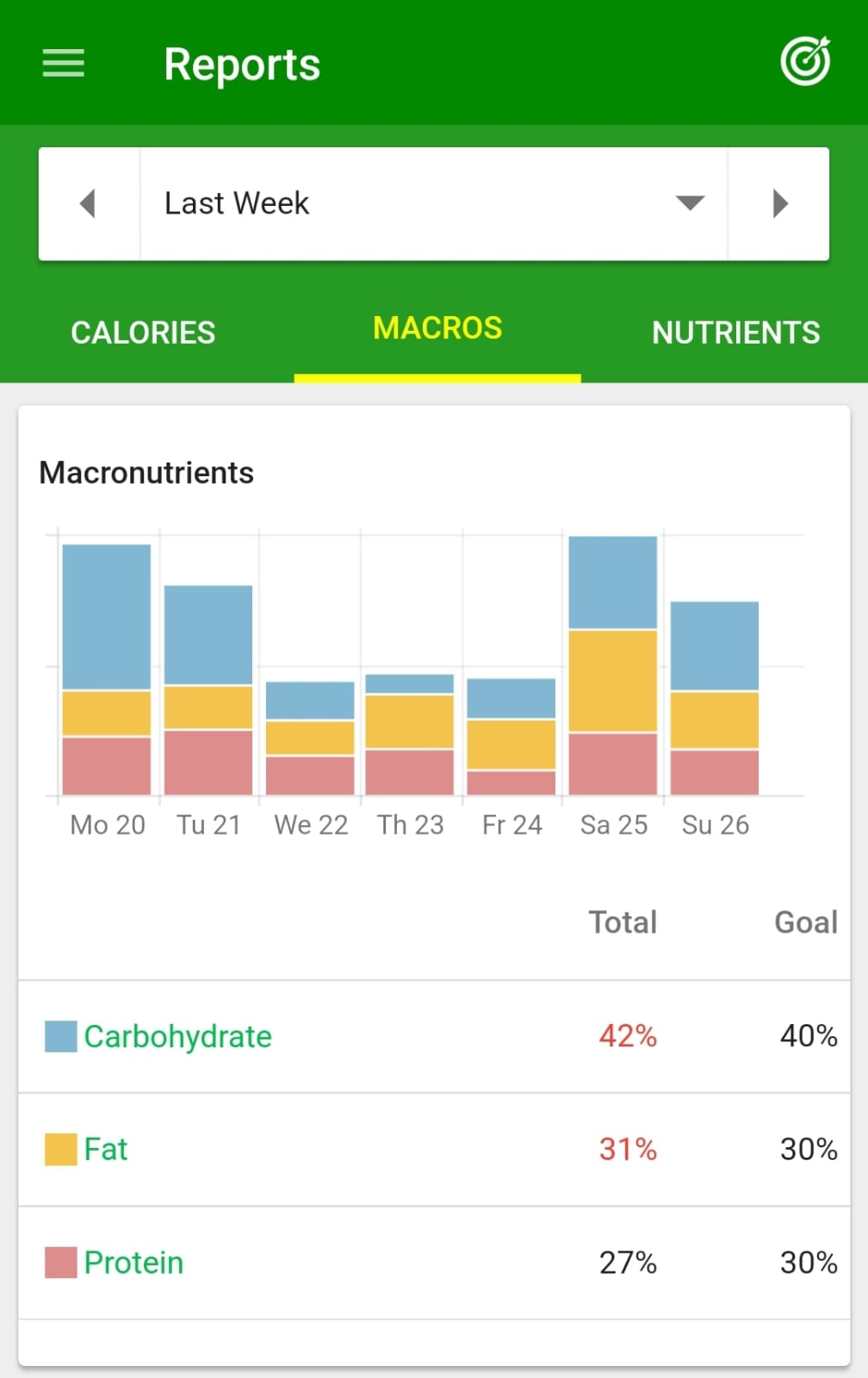
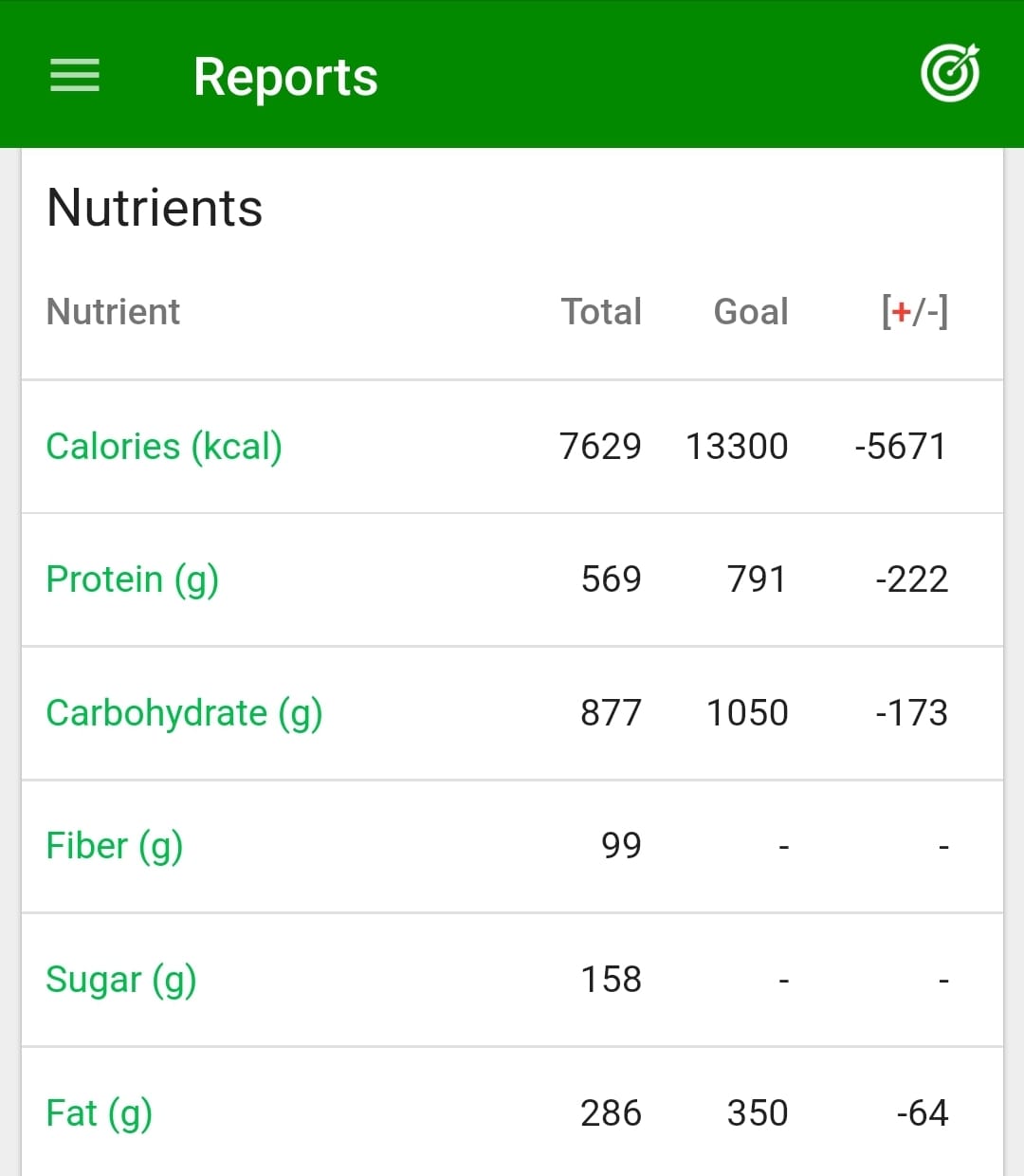
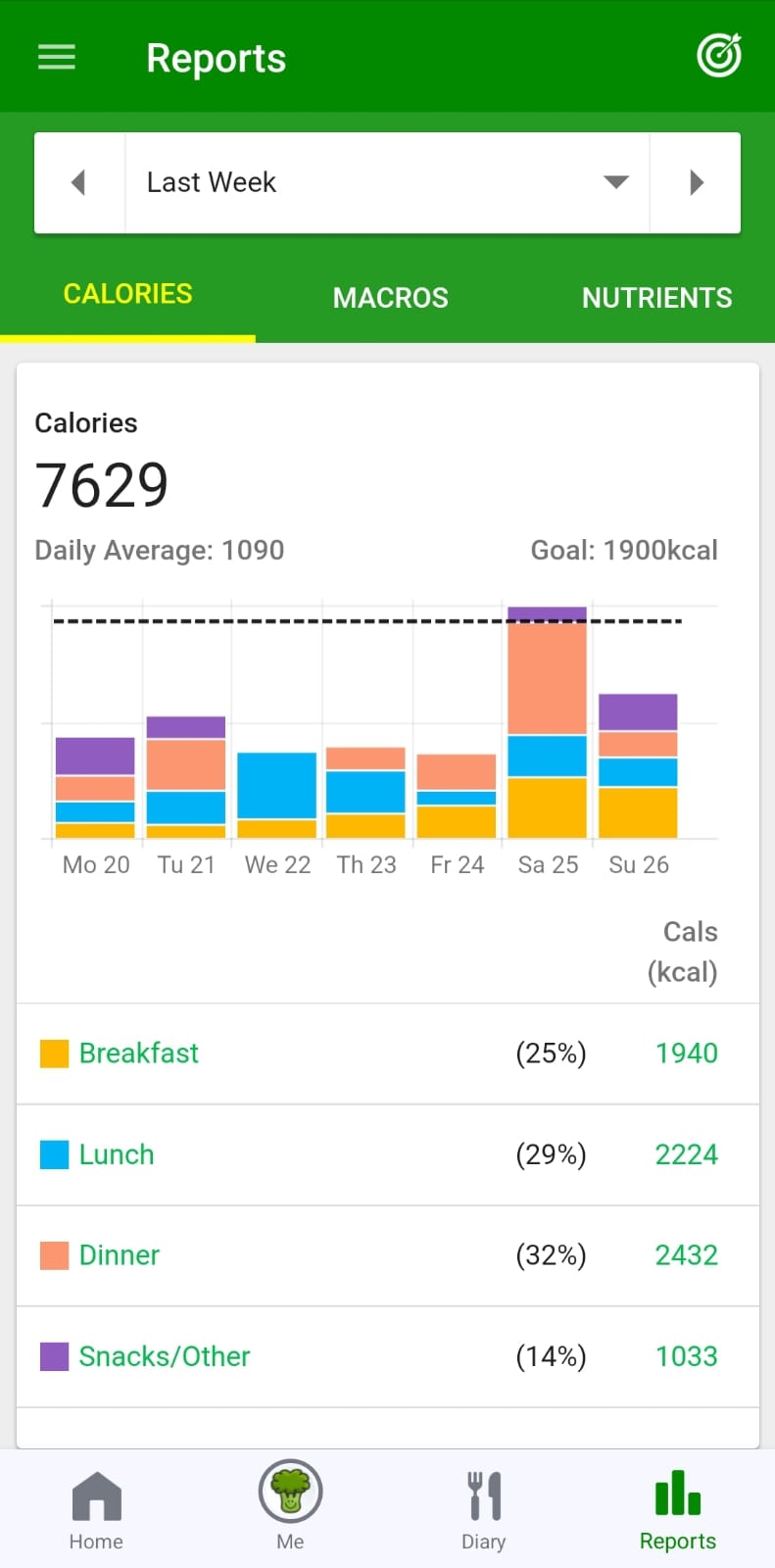
Joslin Diabetes Center, the world’s largest diabetes research center, set a nutrition guideline for diabetes and pre-diabetes to help patients lose weight and control blood sugar. It recommends a daily calorie intake that comes from 40% carbs, 30%-35% fat, and 20%-30% protein. It also suggests that carb intake should not be less than 130 grams per day.
Based on that guideline, it is apparent that I am way from the prescribed macronutrient combination. My food was 42% carbs, and 31% fat.
I need to plan my meals carefully to ensure a healthy eating pattern.
 Life At Slow-Mo
Leave a comment