
Mid 2016 to early 2017 was a very tough period of time for me. I was supposed to finish my master’s degree in 2016. Due to procrastination and work pressure, I missed the March 2016 thesis defense deadline. After resting for a couple of months, I restarted my efforts in June. Progress was slow. It was difficult to get feedback from my advising professor, and I did not know whether I was going in the right direction.
I could not sleep at night. My mind kept going back to my thesis that I often stayed awake until early morning, ruminating about it. For months I had ulcers in almost every part of my mouth. Sometimes it was one ulcer followed by another once the first one healed. Sometimes there were several ulcers developed at the same time.
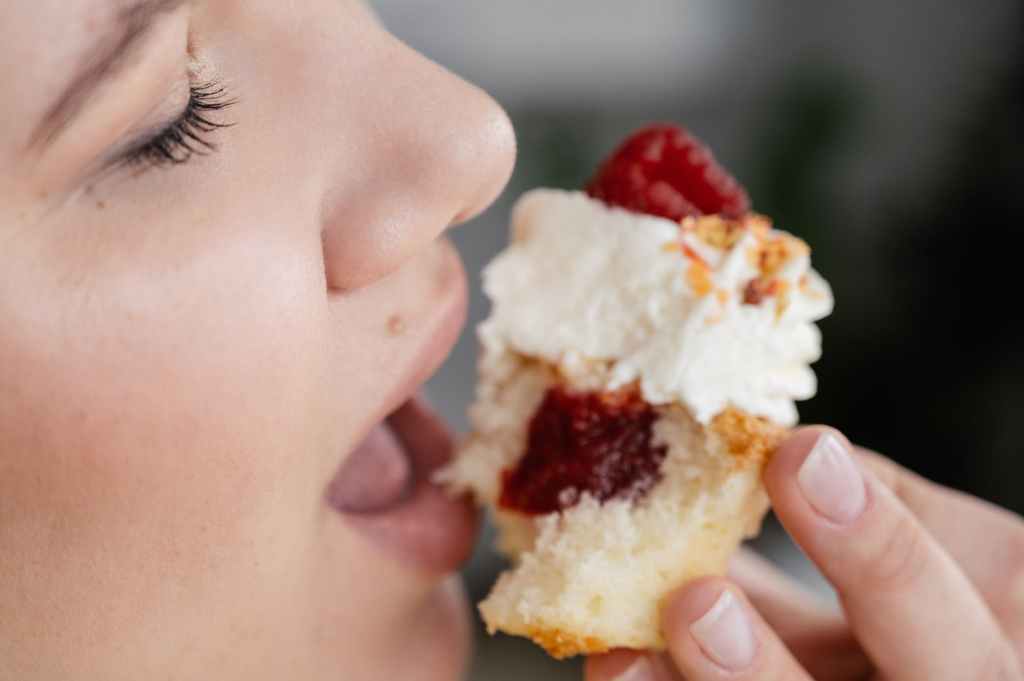
The odd thing was, no matter how painful it was for me to eat, food was where I found my comfort from all my problems. It was so stressful I decided to forget about keeping a healthy weight and to find relief in food. I ate more, I ate often. I ate before I began working on my thesis, I ate while I was working on it, and I ate to escape from it. I ate when I was hungry, I ate when I was full. I didn’t eat to satisfy my hunger. I ate to fill the void in my life.
From that experience, I noticed similar patterns throughout my life. I gained weight during tough times because I ate more when I was stressed.
People react differently to stressful situations. Some people react by working hard day in, day out to fight the threat, they had no time to think about eating. Yet some others, like me, do the opposite. We look for food when facing challenging circumstances.
Some people are so focused on their stress that they ignore hunger cues from the body. On the other hand, for some others, stress causes the brain to think that we are under a real threat. Our body releases cortisol, which is also known as the stress hormone. Cortisol makes us crave sugary, salty, and fatty foods because our brain thinks it needs fuel to fight.
Stress is just another cue for me to eat. There are other cues that cause me to eat or to look for food:
- Coffee. I drink my coffee black. I began this habit when I started my second diet in 2010. My doctor allowed me to have coffee while I was on the diet as long as I had it with very little sugar, and without cream. I got used to black coffee, but later I found it much enjoyable if I had something sweet to go with it. Recently I noticed that thinking about coffee automatically triggered my brain to think about pastries and fried goodies.
- TV. At times, the thought of watching something on TV set me to rummage the pantry for chips or anything salty. At other times, seeing the characters in movies having something to eat or drink made me want to eat and drink, too. There had been several instances where I decided to crack a beer because I saw the characters drinking beer.
- Beer and liquor. A small party for me is having beer and dozens of fried chicken wings. Or at least peanuts and potato chips.
- Fear of waste. When everybody was full after dinner, to whom would they offer the last piece of chicken or meat? Me, of course. Sometimes I cleaned out leftovers because I didn’t want to throw away food.
- Fear of being found out. Sometimes I ordered big portion of snack for my afternoon coffee. When my wife arrived from work and asked, “Have you had dinner?” I would answer, “No.” Even when my stomach was still full from the earlier snack and coffee. I did not want my wife to know that I pigged out.
That is why I made it paramount to retrain my body regarding craving. I want my body to understand that I will only eat when it is time to eat, and in regular portions.
What are the non-hunger cues that cause you to eat?
==The Distracted Guy==
 Life At Slow-Mo
Leave a comment