
It was 4 am, Tokyo time. We left the hotel to catch the 9.10 am flight from Narita to Jakarta via Hong Kong. We planned to take the 4.33 Yamanote Line to Tokyo Station and transfer to the 5.04 Sobu Line Rapid Train to be in Narita at 6 am. Conveniently, the station was just across the street from out hotel.
Because it was so early, the elevator was not operating. We had to dragged our suitcases up the stairs, while looking for the entrance to the platform. In the middle of the dragging, we heard a voice calling out to us. “Airport?” said the middle-aged Japanese gentleman from the top of an adjacent stairs. When nodded our affirmation, he pointed at the gate to Keihin Station that was still closed.
Tokyo is so huge that it takes 30 railway companies and 121 passenger rail lines to serve the city and Greater Tokyo. It’s pretty confusing for visitors. The Shinagawa Station building, for instance, houses not one, but two different stations under different operators under one roof. The Yamanote Line that we planned to take is run by Japan Railway (JR) East. Keihin is another operator. Enter the wrong gate and you might be lost.
I paused for a second. I didn’t know there was a Keihin Line to Tokyo Station. “Narita?” I asked. He shook his head. “Haneda!” Now there was no doubt. Understanding that we were going to different airports, we said our thanks and kept moving to the JR Station gate. Thankfully, it was open.
As we were getting our tickets from the machine, we saw the earlier gentleman catching up to us. “Let me take you,” he offered. He led us to the Yamanote Line platform to Tokyo Station. We thought he meant to take us to the platform and leave us. Instead, he went with us all the way to Tokyo Station. He then proceeded to take us to the tracks, and showed us the Sobu line platform to Narita before he left us.
While riding the Yamanote Line, we had a conversation in Japanese, English, Indonesian, and sign languages. From what we were able to understand, he knew Indonesia. His wife was Indonesian, and he had spent several months teaching in a university in Indonesia. That morning, he was on his way to Haneda for a flight to his hometown to visit his father and mother, who was 91 and 88 years old. Knowing this made us feel bad for making him taking a detour from his plans. It wasn’t free for the man. He had to buy Yamanote ticket just to help us. So not only he spent his time, he also spent his money to help us.
This is not a unique incident. The thoroughness in helping visitors are well known in Japan. If you go into a Facebook group for travelers and ask about the helpfulness of the people in Japan, you will get dozens of real life examples. I must admit, there is no guarantee that everyone you meet in Japan will be just as courteous and helpful. When we were finding our hotel in Osaka, we tried asking for directions from people we met on the street, but since they did not understand English, they shook their heads and kept walking. We finally got help from another foreigner who happened to know the area.
It comes from what is called in Japanese omotenashi (おもてなし). It can be translated into hospitality, but in greater terms it is often understood as consideration for others. They will strive in any way they can not to trouble others. They don’t litter to keep the city clean, despite the lack of trash cans. Riding an escalator, they will stand on the left and leave the right side vacant to allow others who are in a hurry to pass. Operators make sure that trains arrive and leave on time so people can reach their destination in time. City workers keep restrooms spotless so the public feel comfortable using them. Souvenir merchants wrap purchases neatly and turn them into beautiful gifts so customers can present them with pride.
Admittedly, we have imported culture from Japan in our daily life. Ask any young adult today what anime character that they like. Most likely they could name at least one. In your lifetime, you might have consumed a savory snack that contained MSG, a food flavor enhancer invented in Japan. Why not import the omotenashi into our daily lives? What can we do today that make life easier for someone?
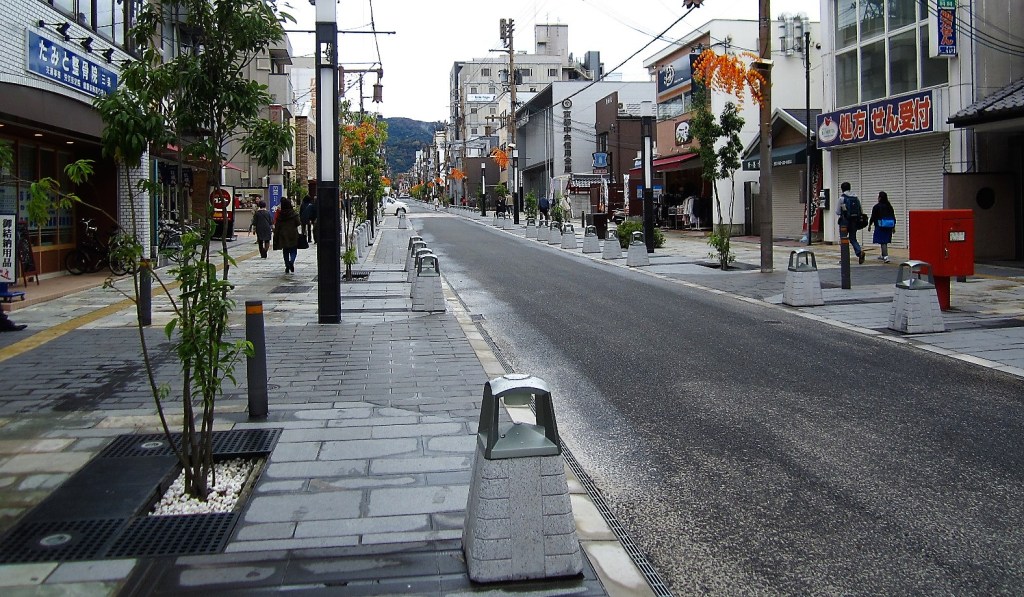
Originally published as a Facebook post. Featured picture: The clean street of Nara, Nara Prefecture, Japan. Photo: Stephen Siregar (2015). All Rights Reserved.
 Life At Slow-Mo
Leave a comment